Scotland is brimming with natural wonders, but there is one truly extraordinary destination that belongs on every bucket list. Located just off the nation’s West Coast is Staffa, a tiny, uninhabited island that plays host not only to its own puffin colony, but also to the majestic Fingal’s Cave, a site frequently celebrated as the planet’s most beautiful sea cave.
Nestled within the Inner Hebrides in Argyll and Bute, Staffa sits roughly six miles from the Isle of Mull. Measuring a mere half-mile long and a quarter-mile wide, this remote island and its mysterious cave are notoriously difficult to reach, with visits generally restricted to the calmer months between April and September.
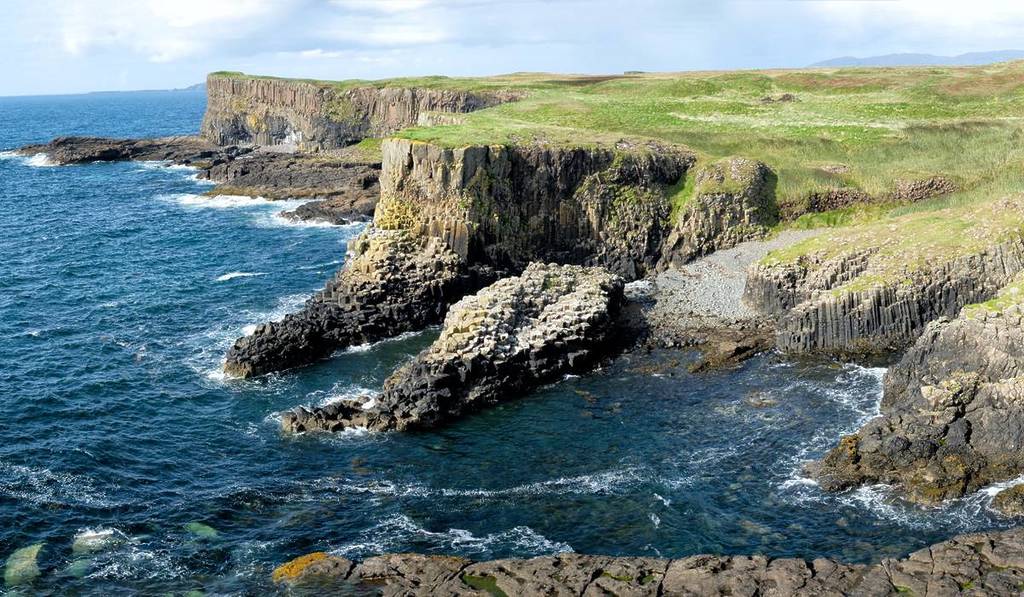
Managed by the National Trust for Scotland as a dedicated nature reserve, Fingal’s Cave boasts striking, hexagonally shaped basalt columns that have captivated creative minds for generations. Locals often refer to this natural marvel as the “Melodic Cave” due to the unique, echoey acoustics created by the crashing waves, a sound that even inspired one of Pink Floyd’s early tracks.
How the cave was formed
The cave’s distinct hexagonal structures are the result of ancient volcanic activity. As a massive lava flow cooled over time, it contracted and cracked into these precise geometric pillars. For millennia since, the relentless waves of the Atlantic Ocean have battered the island, carving out the dramatic cavern we see today. Standing before this awe-inspiring work of nature is a profound privilege that serves as a powerful reminder of the planet’s raw beauty.
Planning your visit to Staffa and Fingal’s Cave
For those starting their journey in Glasgow, the most efficient route is to drive two and a half hours to Oban, or take public transport, and board a sea tour. Outfitter Staffa Tours runs several comprehensive excursions to Staffa and its neighbouring islands, with some itineraries lasting up to 12 hours. Additionally, you can take the ferry to Craignure on the Isle of Mull and get picked up by Turus Mara if you’d like to save some money.
However, keep in mind that the sea around Staffa is known for its rough waters, and some days the tours get cancelled if it’s unsafe, so visiting during the summer months is recommended. We went in April, and let me tell you, it was quite the ride. Plus, Staffa is currently closed, so you cannot get off on the island, but you can still take a great look at Fingal’s Cave.
As a bonus, travellers can expect to spot Scotland’s beloved puffins, which regularly flock to Staffa during their nesting season.