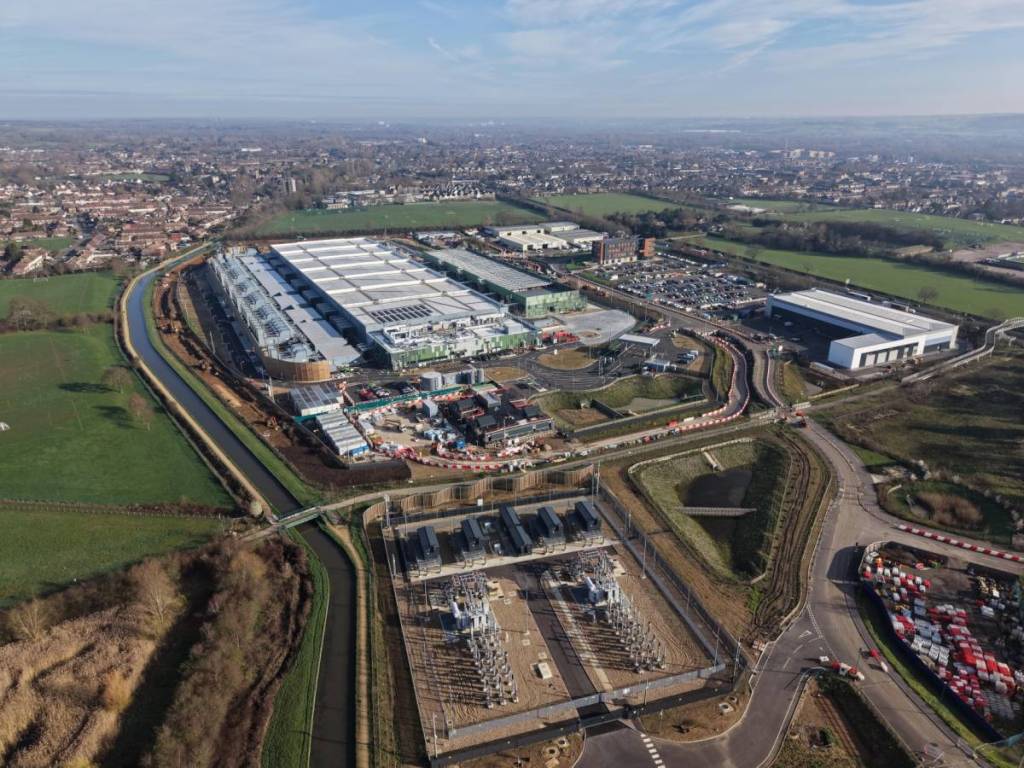

AI data centres in Scotland – a topic a lot of us have heard of, and maybe even signed a petition or two. Even if you haven’t heard of them, you have definitely used them – every time you type in a Google search or a ChatGPT query, the AI summary or reply comes directly from a data centre.
And currently, 23 massive data centres are planned for Scotland, hoping to put our country at the front of the global AI race. While the completion of these projects would certainly aid in doing so and make a lot of money, there are significant environmental factors to consider before going ahead.
As a result, campaigners across the country have been calling for a pause in action to be able to reassess the situation before we sign ourselves up for something we cannot go back from.
What is a data centre?
While the structures look like a giant factory or a warehouse, what’s inside a data centre is completely different. Inside, a ginormous number of computer servers are used to power AI systems. And, interestingly enough, we don’t always know what companies these servers are actually powering due to “commercial sensitivities”. Of course, giants like Google, OpenAI or Amazon are obvious.
Currently, Scotland doesn’t have massive data centres, but the hyperscale project proposals have been underway for a while.
What are “hyperscale” data centres?
When clarifying what “hyperscale” data centres would look like, Scottish Civic Trust noted: “It’s a data centre built on a massive scale, designed to store and process huge volumes of digital information for things like AI and cloud services.
“Given their size, these facilities need very high amounts of energy and cooling, plus strong connections to the electricity grid and communications networks. They’re also built to grow, with more computing power, storage, and infrastructure added as demand increases.
“There’s no formal definition of “hyperscale” in Scottish planning policy, but the term is generally used to describe facilities housing thousands of servers with at least 900 square metres of floor space and around 100MW of power. In practice, though, most proposals in Scotland go well beyond that minimum, with some stretching across many hectares of land.”
Why are data centres so controversial?
On a global scale, the fear of the unpredictability of the future of AI is real, as the technology is developing at the fastest rate in history. The question of what will happen once the new “super” AI starts to become smarter than humans is a topic of conversation among many scientists, and what happens next is just unpredictable.
However, this is not the primary reason why people are campaigning against the data centres in Scotland. The sheer size and utilisation of our resources required by the hyperscale data centres is a concern on its own, siting significant environmental impacts.
For example, the largest data centre in Scotland in Airdrie currently has a capacity of 12MW. If the plans go ahead, a single hyperscale data centre in Chapelcross, Dumfries and Galloway would have a capacity of 1,000MW, which would be one of the largest in the world.
Overall, people are concerned about their impact on the landscape, the sheer amount of electricity they would use, the massive amount of water needed to cool the servers and, of course, the noise generated by said servers.
Of course, Scotland’s renewable energy sector is booming, and there is plenty of water to go around. However, during low wind periods, the data centres would have to run on non-renewable energy. What is more, the data centres could take away from our drinking water supply, which is already running low in some areas of the UK, according to experts.
As for the noise, those who live near the huge data centres in the US have reported constant noise from the server fans, remarking it has driven away wildlife.
What is the upside of AI data centres?
Creating new jobs is one of the biggest upsides of AI data centres. In Scotland, around 2,000-3,000 construction workers would get temporary work while the centres are being built, while between 50-100 permanent jobs would be created per centre. And, of course, being a world leader in AI development would boost the economy.
So far, tens of thousands of poeple have signed petitions urging to stop the hyperscale AI data centres in Scotland, and you can read more about it here.
The Scottish Greens are also campaigning against the move, and you can read more here.