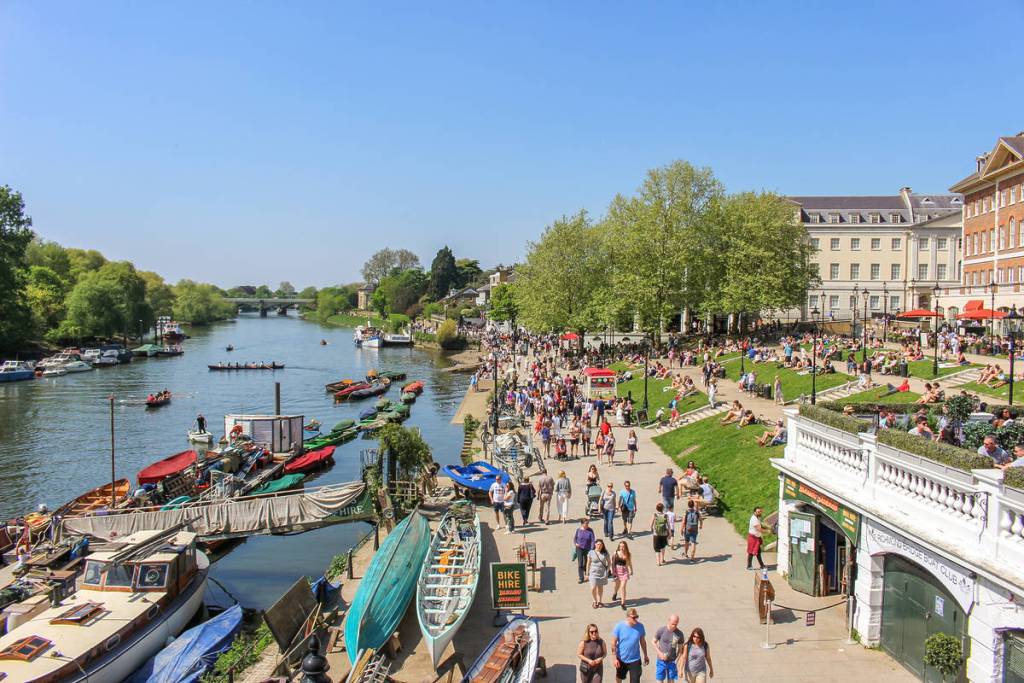

The UK has just lived through its hottest summer since records began in 1884, with the Met Office confirming a provisional mean temperature of 16.5°C for June-August 2026.
Scientists say this level of heat was made around 130 times more likely by human-induced climate change, turning what would once have been a 1-in-1,000-year event into something we can now expect roughly once every nine years.
Summer of 2026 was UK’s hottest on record, according to the Met Office
The UK’s average mean temperature for summer 2026 was 16.5°C, beating the previous record of 16.1°C set in 2025. This makes 2026 not only the hottest summer on record but the warmest season overall in the Met Office series going back to 1884.
England, Wales and Northern Ireland all broke their summer mean temperature records, while Scotland had its joint sixth-warmest summer.
The top five warmest UK summers have all occurred this century, with 2026 at 16.5°C, followed by 2025 at 16.1°C, and 2018, 2006 and 2003 each at 15.7°C.
How climate change supercharged the heat in the UK
A rapid attribution study by Met Office scientists quantified the role of the climate crisis in this summer’s extremes.
In a world without human greenhouse gas emissions, a summer like 2026 would be expected only once in over 1,000 years, roughly a 1-in-1,148-year event.
In today’s warmed climate, driven by fossil fuel burning, such a summer is now roughly a 1-in-9-year event. Dr Mark McCarthy, the Met Office’s head of climate attribution, called summer 2026 “remarkable” and said it is “an example of the extremes we can expect to see more frequently” as the planet continues to warm.
2026 was a summer of heatwaves, drought and wildfires
This summer wasn’t just hot on average; it was persistently extreme.
Five widespread heatwaves swept the UK, with 40 days recording temperatures of 30°C or higher, smashing the previous record of 34 days.
The highest temperature recorded was 38.1°C at Kew Gardens, London, on 13 August, with June also delivering a provisional UK record of around 38°C in Lingwood, Norfolk.
England had its driest July on record, with just 6.5mm of rain, about 10% of the long-term average and less than half the previous low of 13.4mm in 1911.
The dry, hot conditions fuelled an unprecedented number of wildfires, including a blaze near the Sizewell nuclear plant in Suffolk that caused “total devastation” to a protected landscape, and fires in Stourbridge that destroyed 19 homes.
The heat had wide-ranging consequences for health, infrastructure and the economy. Across Europe, extreme heat over the summer has been linked to at least 35,000 excess deaths, with the UK also seeing thousands of heat-related fatalities during the early heatwaves.
Schools, hospitals and transport networks struggled to cope: many schools closed, hospital appointments were cancelled, and services were disrupted as buildings and systems overheated.
Agriculture took a heavy hit: cereal yields fell sharply, with Britain’s harvest on track to be the worst since comparable records began in 1984, and think tanks estimating millions of tonnes lost due to drought.
Lost productivity from the heatwaves has been estimated in the billions of pounds, while water restrictions and hosepipe bans spread across large parts of southern and eastern England.
What this means for future UK summers
Met Office climate projections indicate that UK summers will continue to become hotter and, in many regions, drier.
Dr James Pope, a Met Office climate scientist, said this summer “fits closely to what we would expect an average summer to look like in the UK under 3°C of global warming”.
The fact that the top six warmest summers have all occurred this century, and three of them in this decade, underlines how quickly the baseline is shifting.
Without rapid cuts to greenhouse gas emissions, summers like 2026 will move from exceptional to typical, with more frequent drought, wildfire risk and strain on health and infrastructure.