It is fair to say Scotland boasts a few traditions that the rest of the world might find a bit bizarre. We are fiercely obsessed with Irn-Bru, ceilidhs are a standard weekend plan, and deep-fried Mars bars have left plenty of people questioning reality, as a massive amount of Americans don’t believe they’re real. Yet, many people remain unfamiliar with a 14-century-long Celtic tradition: hanging rags from tree branches as symbols of healing and good fortune.
One of the most famous locations for these offerings is Scotland’s own Clootie Well, or at least it was, until someone decided to completely “tidy it up” back in 2022.
What is Clootie Well?
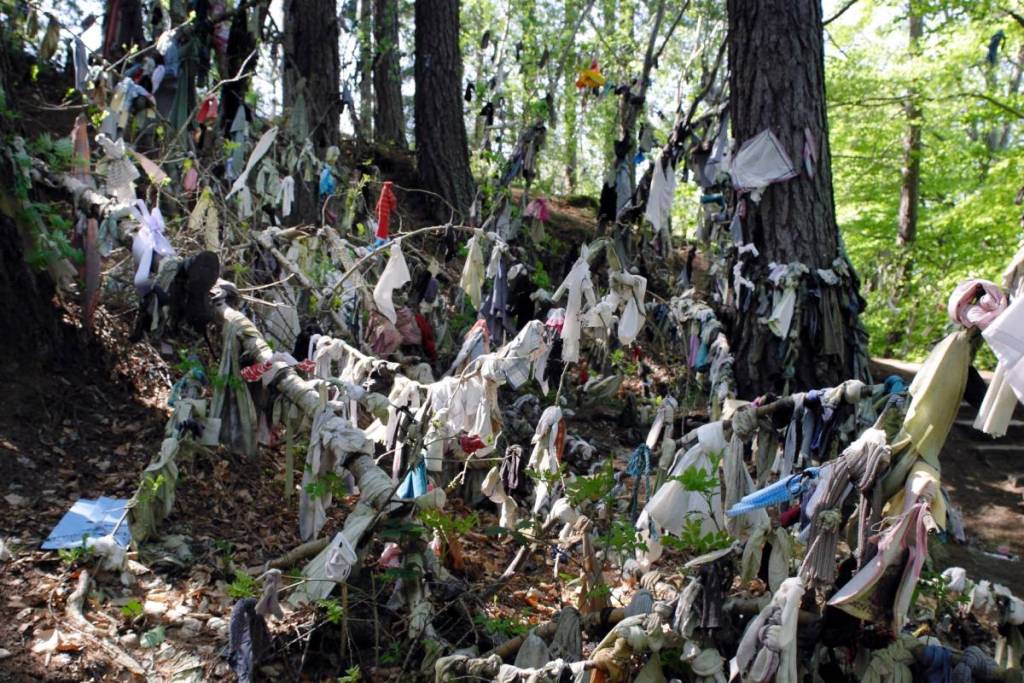
Nestled in Munlochy on the Black Isle near Inverness, Clootie Well is a natural spring that serves as a sacred pagan site, predating Christianity. The surrounding grove of trees was historically decorated in a hauntingly mesmerising fashion with clothes and rags, known in Scots as “cloots”. These offerings were left to bring prosperity and health to their owners.
The well’s waters have been revered for their healing properties for an incredibly long time, with roots dating back to AD 620. Right up until 2022, visitors faithfully maintained the tradition, leaving the site draped in rags that gave the woods a distinctly eerie, otherworldly atmosphere.
What happened to all the cloots at Clootie Well?
Unfortunately, a lone individual took it upon themselves to “clean up” Clootie Well, stripping every single rag from both the trees and the well itself. The sudden transformation sparked fierce debates across local Facebook communities, with people fiercely arguing both sides of the issue.

The Traditional view argued that the cleanup was deeply disrespectful. According to local lore, removing a rag before it naturally disintegrates reverses the owner’s good fortune, turning it into bad luck. However, the Environmental View pointed out the environmental impact, noting that many modern materials left on the branches were non-biodegradable.
While the identity of the person responsible remains a mystery, it appears a single individual managed to strip the entire site of its cloots all on their own.
As reported by The Guardian, local resident Claire Mackay shared: “I’m sure the person who cleared up thought they were doing something good but the fact they took it upon themselves, weren’t a local and did it without the permission of Forestry and Land Scotland [which manages the site] has upset a lot of people. The clean-up should have been a community decision, but now we can treat it as a clean slate and hope it has planted that seed about the need for people to leave more natural things.”
Furthermore, the site already featured a sign explicitly requesting that visitors only leave “small, biodegradable offerings.” Local rangers were also already in the habit of routinely removing any unsuitable, synthetic items. While the accumulation of modern, plastic-heavy clothing was a valid concern, it was nothing the local community and rangers couldn’t manage together.
So, where does that leave us? Perhaps it’s time to head out and leave a wee, fully biodegradable (100% wool or cotton is best) offering at Clootie Well. After all, you can never really have too much good luck.
And if you’re in the mood to discover another Clootie Well in Scotland, you can also check out the one in Culloden Forest, near Inverness.